No hot water
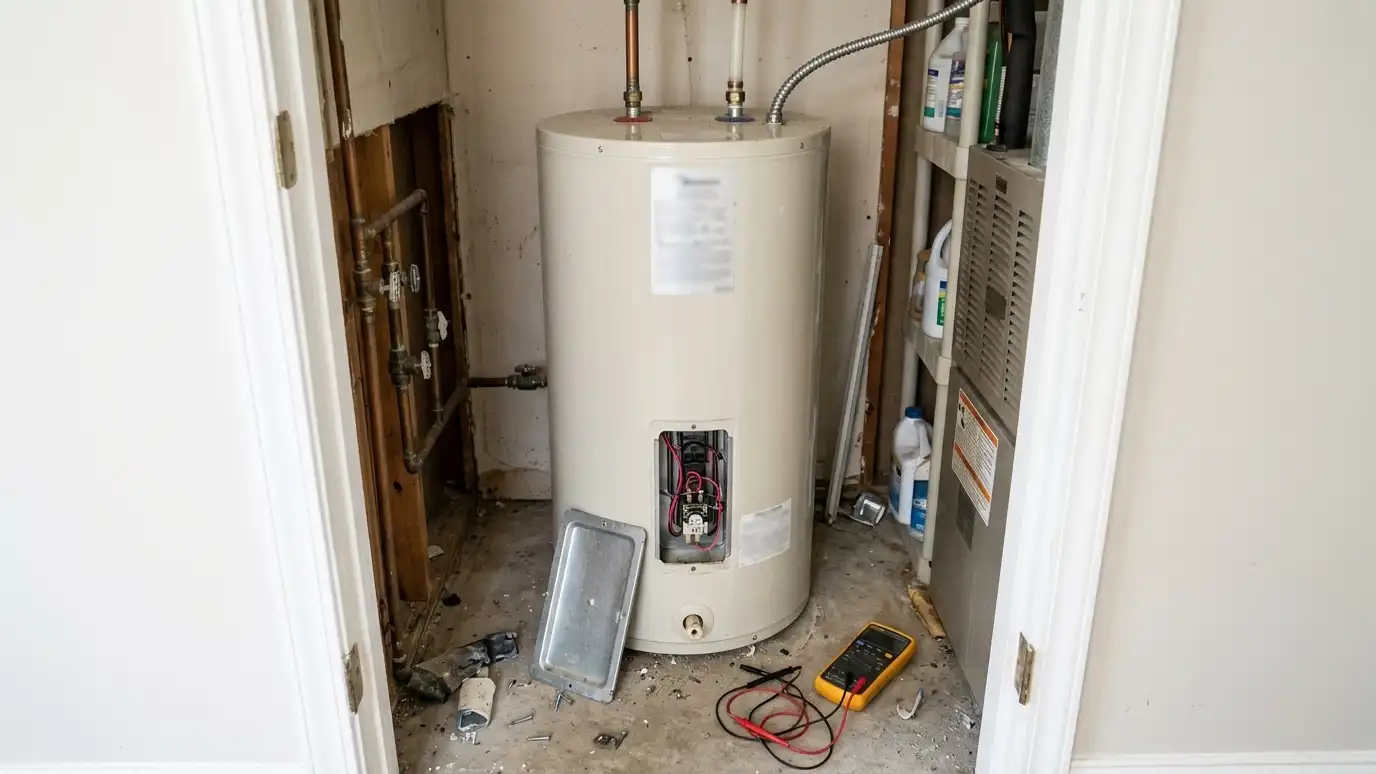
For a gas heater, check the pilot or the display. For an electric heater, check the breaker and the reset button on the heater. If the heater is warm but not hot, an element or a thermostat may have failed.
If you smell gas, leave the home and call your gas utility.
Do not tamper with a gas control valve.
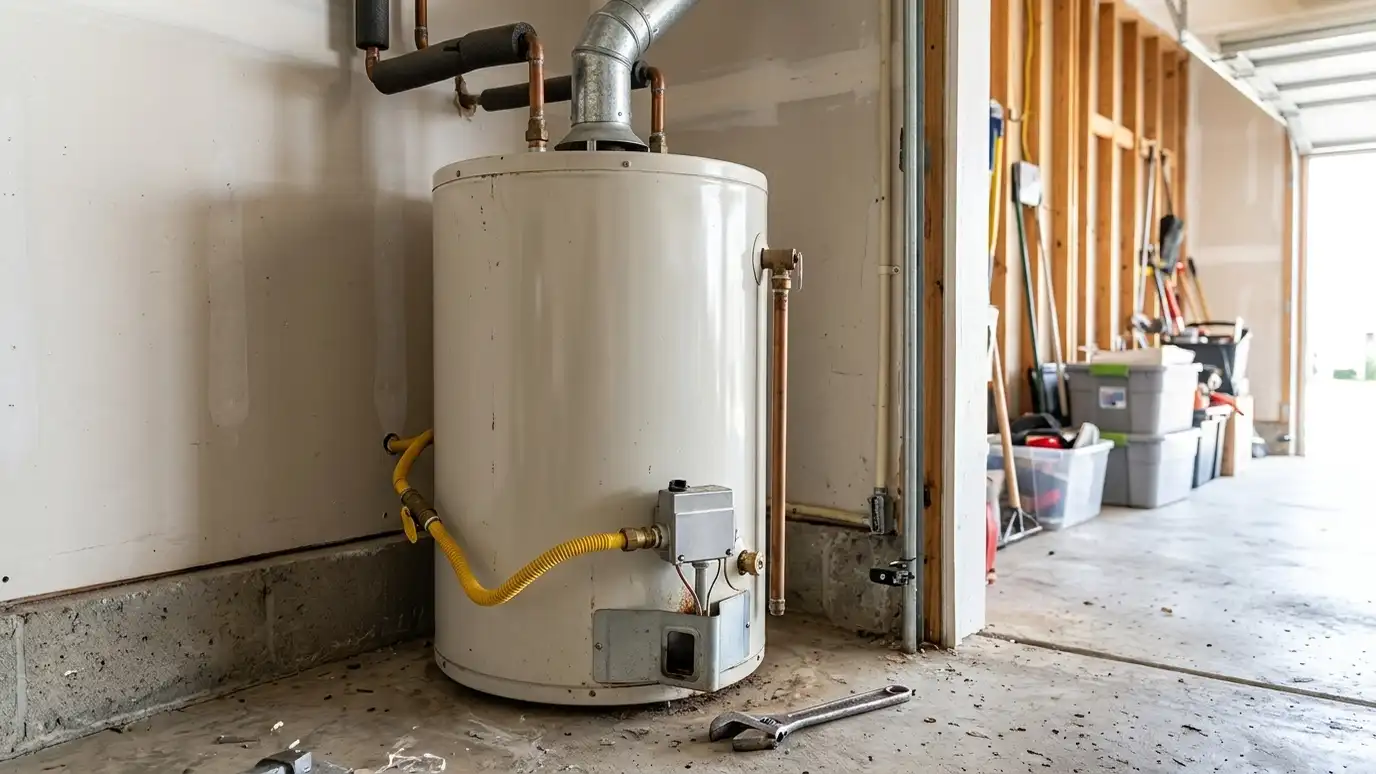
If the heater is in a garage or attic, make sure the pan drain and the relief valve pipe have a clear, safe path, and that nothing is stored against the tank or the flue.
Lukewarm water
A failed lower element on an electric heater, a sediment-covered burner or a thermostat set too low are common causes. A cross-connection or a broken dip tube can also dilute hot water.
Check the temperature setting, which many experts place around one hundred twenty degrees.
Call if the setting is correct and the water is still weak.
Know where the cold water shutoff and the gas or electric shutoff for the heater are, and tell everyone in the house. In a leak, the first minute matters most.
Running out too fast
An undersized heater, heavy use or sediment that takes up tank space can run you out. A failing element can too.
Spreading showers and laundry through the day helps.
A tankless heater may be limited by flow or scale.
If your family has grown or you have added a big tub, the heater may be undersized. A short conversation about your usage can show whether a larger tank or a tankless unit helps.
Leaks
Leaks at fittings or the relief valve can be repaired. A leak from the tank itself means replacement. Shut off the water and power or gas to the heater and call.
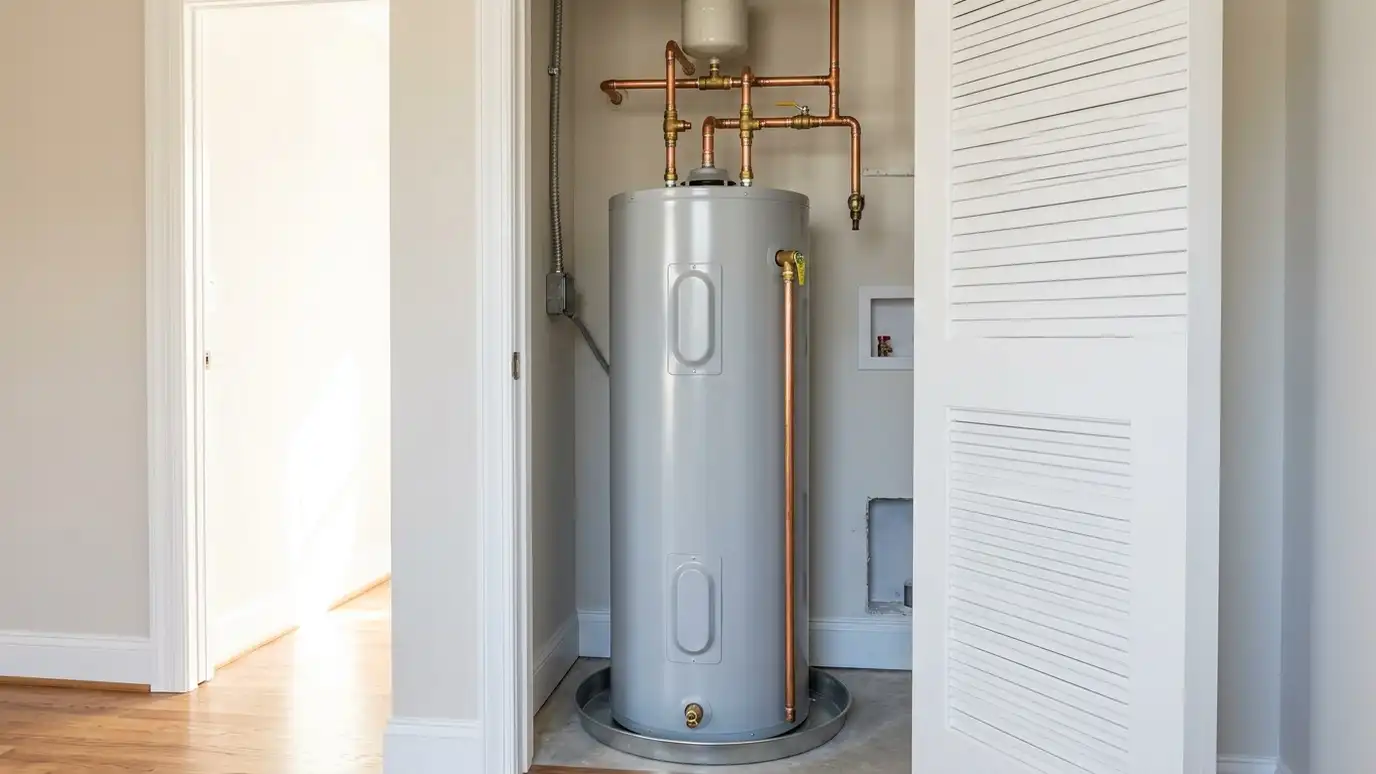
A drain pan and a leak alarm limit damage.
Do not ignore dripping, because it grows.
A leak alarm on the floor near the heater costs very little and gives you early warning. Pair it with a drain pan that routes water to a drain where practical.
Noise
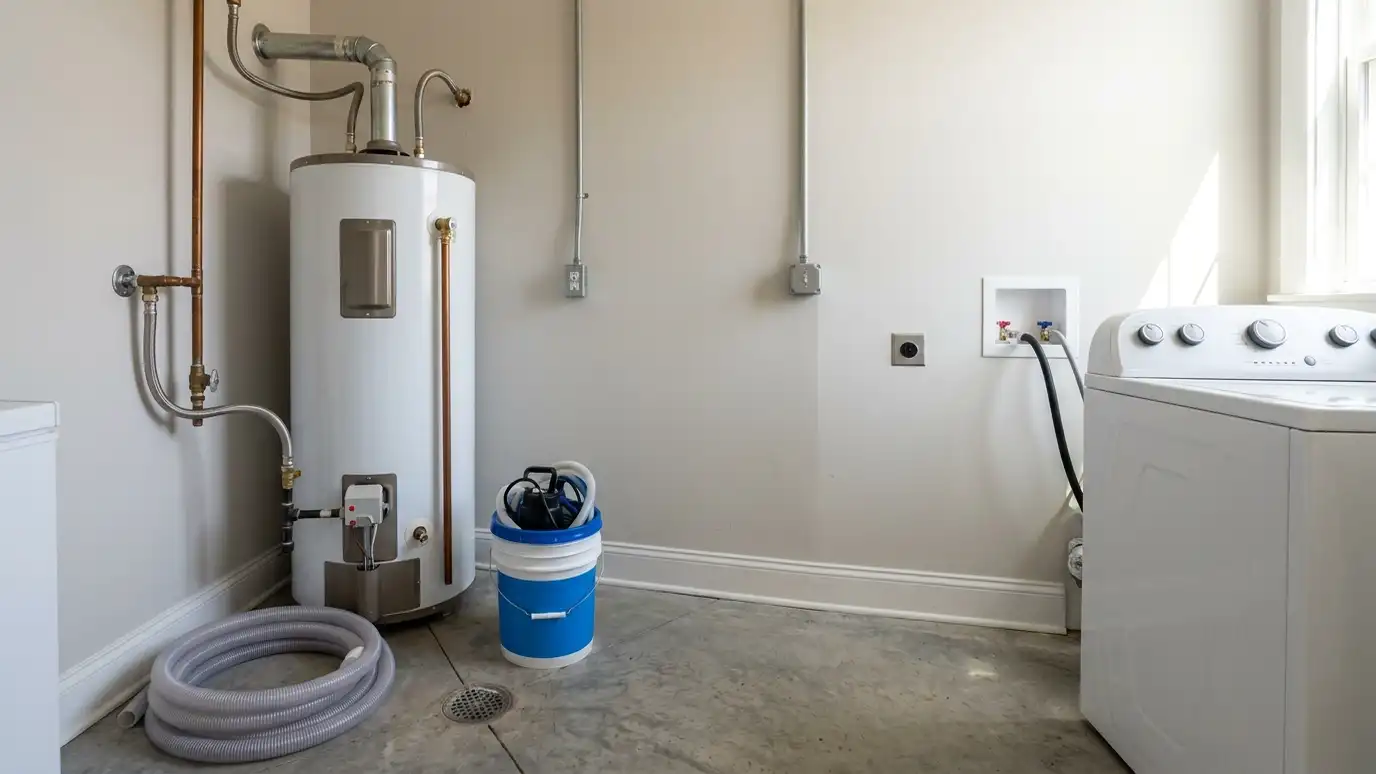
Popping and rumbling come from sediment on the bottom of the tank. A flush can help. Tankless units may whistle when scale restricts flow.
Hissing at the top can mean condensation or a leak.
Screaming or banging pipes point to pressure issues.
Noise is a message. A rumble or pop is sediment, and many owners are surprised by how much quieter and more efficient a heater is after a flush.
Maintenance
Flush a tank heater yearly in hard water areas, test the relief valve, check the anode rod every few years and keep the area clear. Descale tankless units yearly.
Set a sensible temperature and add a drain pan.
Keep a record of the install date.
The anode rod protects the tank from corrosion and is sacrificial, meaning it wears out. Checking it every few years, and replacing it when it is mostly gone, can extend a sound tank by years.
When to replace
A leaking tank, a heater past its typical life with repeated problems or costly repairs on an old unit point to replacement. We can compare tank and tankless and install the new one.
Plan ahead if your heater is more than ten years old.
A planned replacement is easier than an emergency.
If your heater is past ten years and showing rust at the base or the fittings, start planning, because a calm replacement is cheaper and easier than an emergency one.
Flush and inspect on schedule, set a safe temperature and replace a leaking tank before it floods.