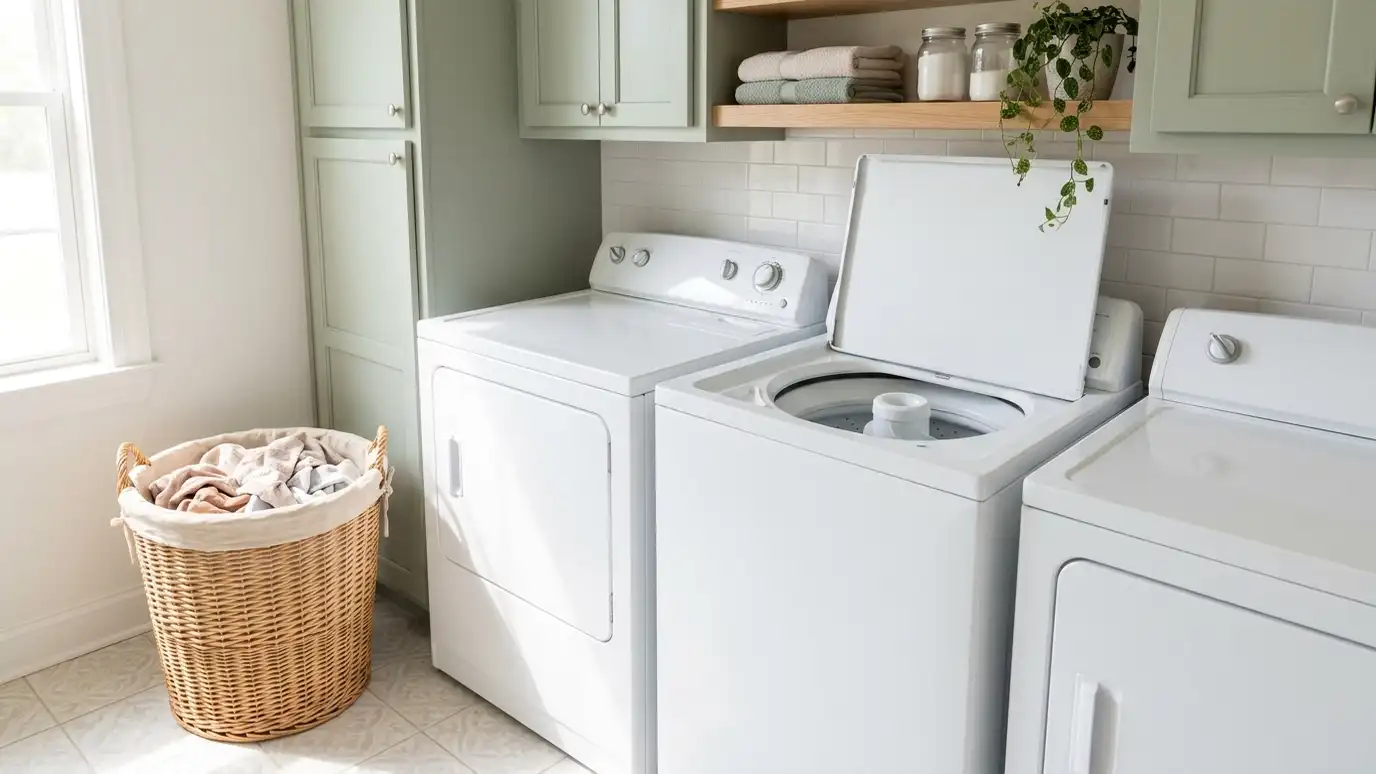
Repair for top load washers: agitator and impeller models, lid switches, transmissions, belts, drain pumps and inlet valves.
Top load washers are still the most common type in many Nashville homes, from long-time family machines to modern high-efficiency models with an impeller instead of an agitator. They are mechanically simple compared to front loaders, which is good news when something breaks: the repair is usually straightforward. Common complaints include a washer that will not agitate or spin, fills slowly, does not drain, stops mid-cycle or sounds like it is grinding something up.
We test the lid switch, water level or pressure sensor, inlet valves, drain pump, belt, motor coupling, transmission or clutch, agitator dogs and the control. We check the load balance and level and read any error code. We explain exactly what failed and whether the repair makes sense for the age of the machine, and we run a full cycle before we leave to confirm fill, wash, drain and spin.
A broken agitator dog, worn coupler or transmission problem keeps the washer from moving clothes.
A worn belt, clutch or lid switch stops the spin, and an unbalanced load can trigger it too.
Clogged inlet screens or a weak valve slow the fill and are quick to clean or replace.
Pumps and hoses clog, and we clear and test them.
Wash action restored.
Cycle starts and finishes.
Spin and agitate.
Fast, full fill.
Verified before we leave.
Repair or replace.
Every topic has its own page with what to expect and how we approach it.
 Topic guideWasher Types ComparedFront load, top load agitator, top load impeller and compact washers compared on cleaning, water use, size and…Learn more
 Top appliance brandWhirlpoolA long-established American maker of washers, dryers, refrigerators, ranges and dishwashers found in many Nashville homes.Learn more Top appliance brandMaytagAn American brand known for washers and dryers, with refrigerators, ranges and dishwashers common in family homes.Learn more
Enter watts, hours and your power rate to see what an appliance costs to run each month and each year, and compare an old unit with a new one.
You tell us the brand, the model and what the appliance is doing, and we give you early guidance and set a visit that fits your day.
A technician inspects the appliance, reads codes and tests parts with meters and gauges to find the real cause.
You get a plain written plan with the parts, the work and the cost, and honest advice on repair or replace.
We repair with parts matched to your model, or install the new appliance level, connected and secured.
We run the appliance through a full cycle, check for leaks and show you how it works before we leave.
We keep a record, answer questions and stay available if anything seems off after the visit.
A broken agitator dog, a worn coupler or a transmission problem is the usual cause.
A lid switch, a water level issue or an unbalanced load can pause the cycle.
A worn belt, a slipping clutch or a drain problem prevents a good spin.
On newer or higher-end washers often yes. On older machines we compare the cost with replacement.
A monthly cleaning cycle with a washer cleaner helps prevent buildup.
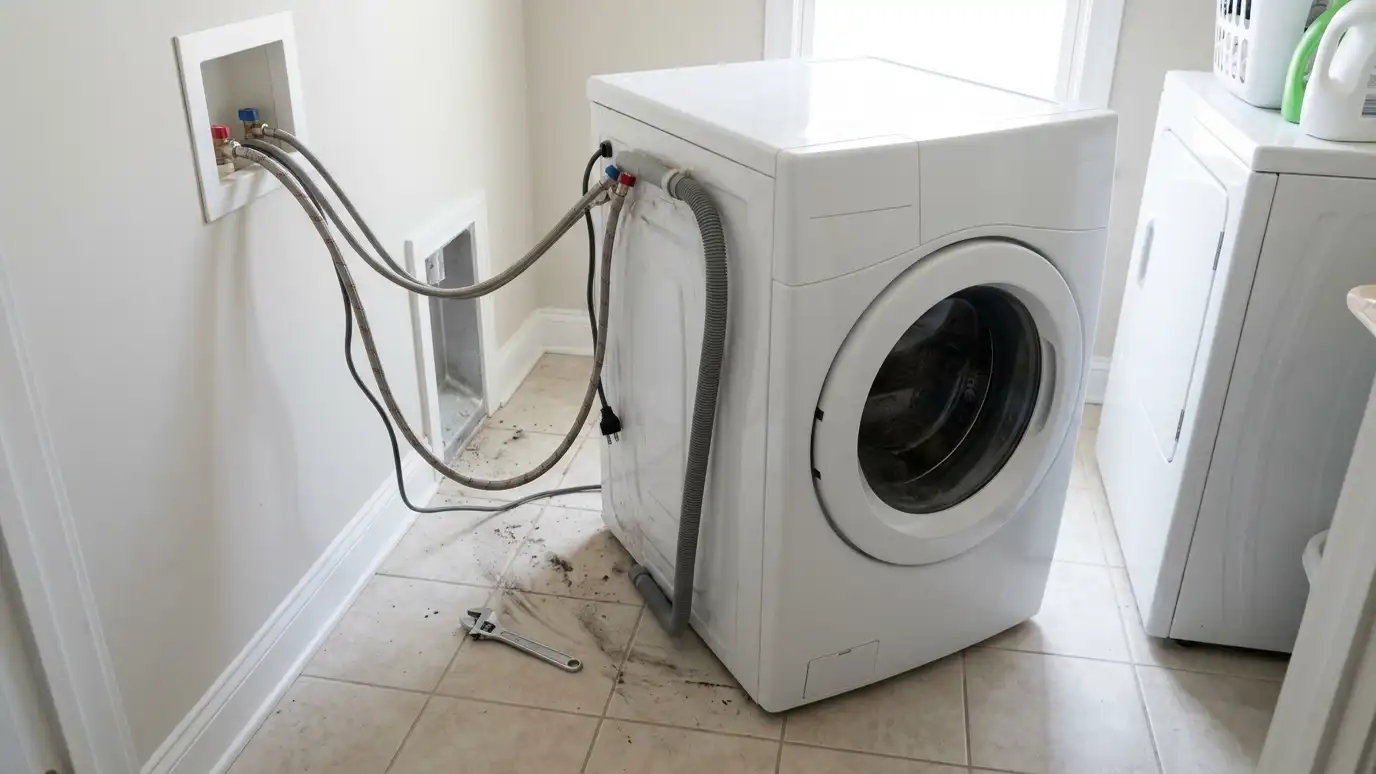 Washer RepairRepair for washing machines that will not drain, spin, fill or start, or that leak, shake, smell or…Explore
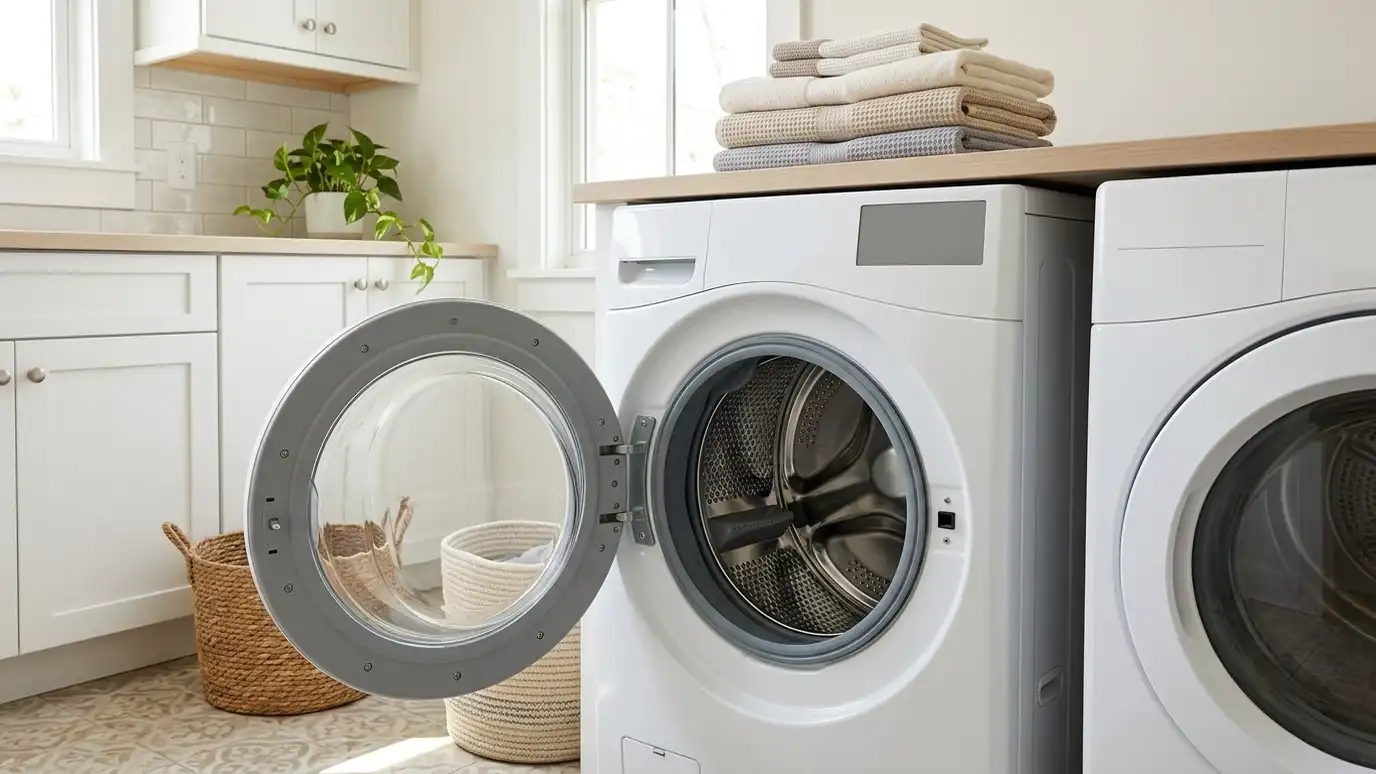 Front Load Washer RepairRepair for front load washers: door boot leaks and mold, drain pumps, bearings, door locks, suspension and error…Explore
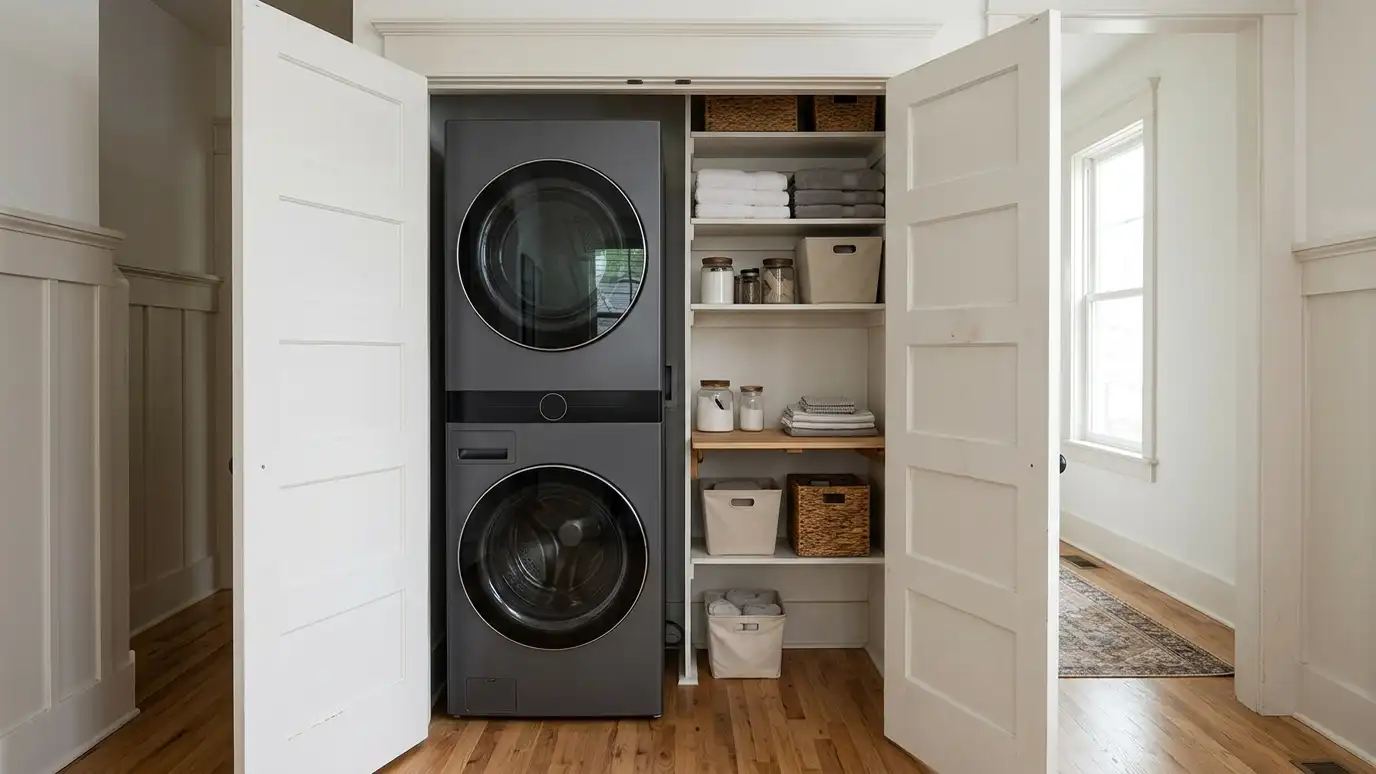 Stackable Washer and Dryer RepairRepair for stacked washer and dryer towers and all-in-one laundry centers in closets, condos and apartments.Explore
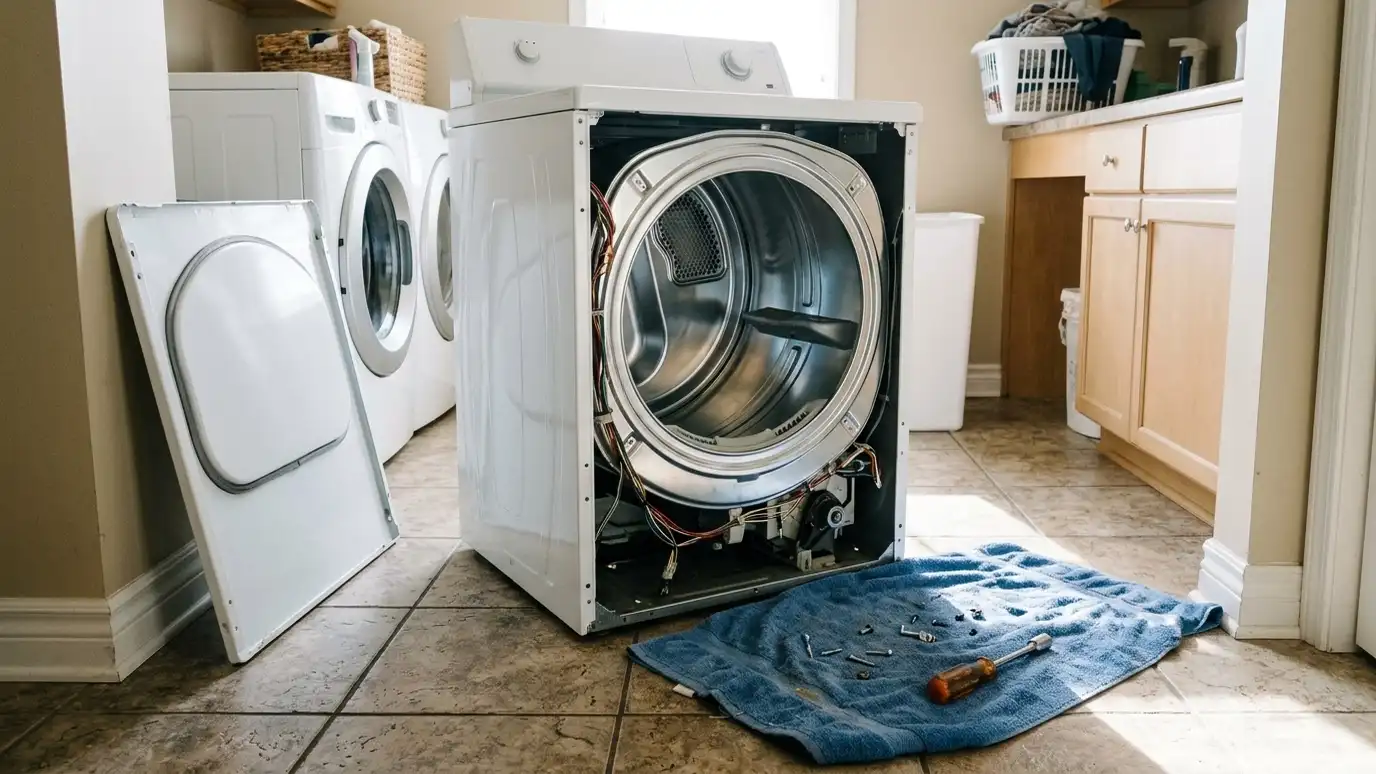 Dryer RepairRepair for dryers that will not start, heat, tumble, shut off early, make noise or take too long…Explore
Tell us about your appliance and we will call you back to set up a visit.
Or call (615) 357-7797 to talk now.