Dishes not clean
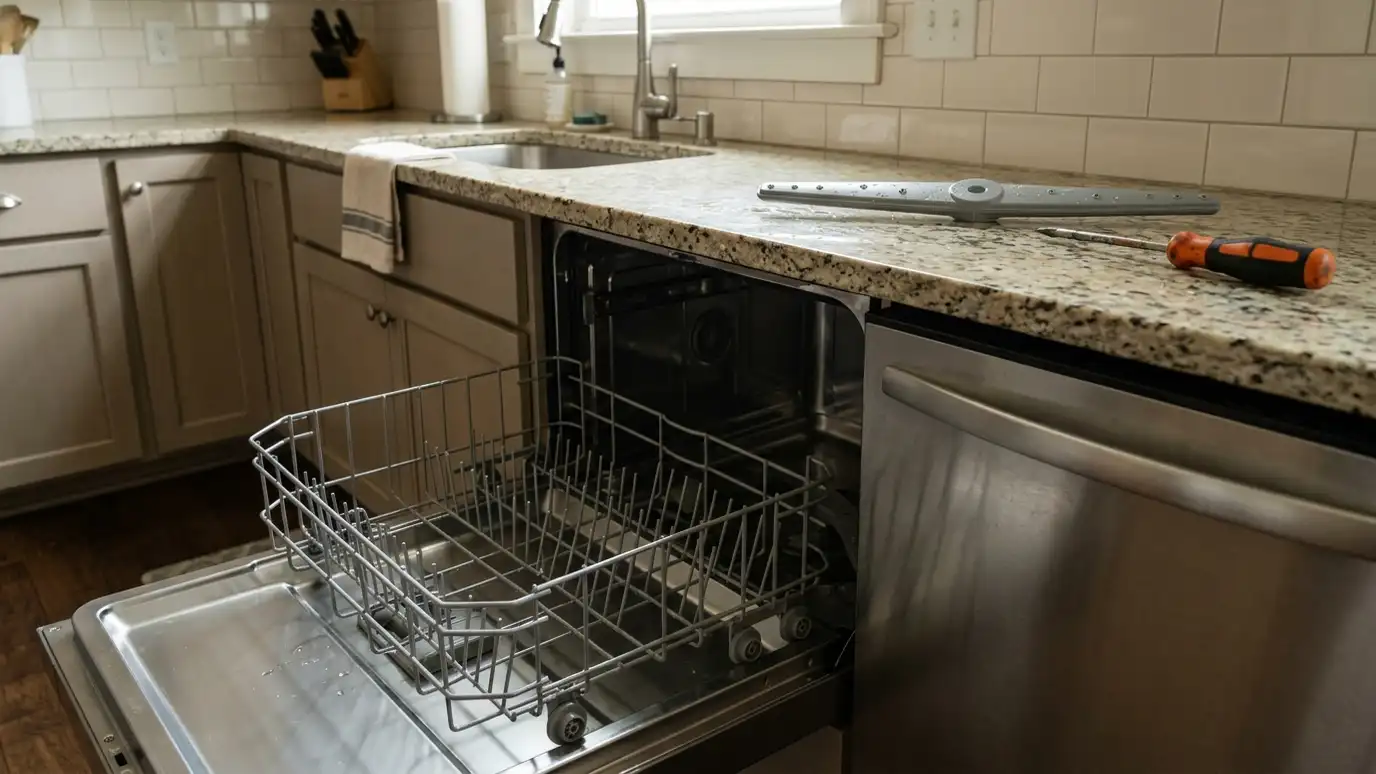
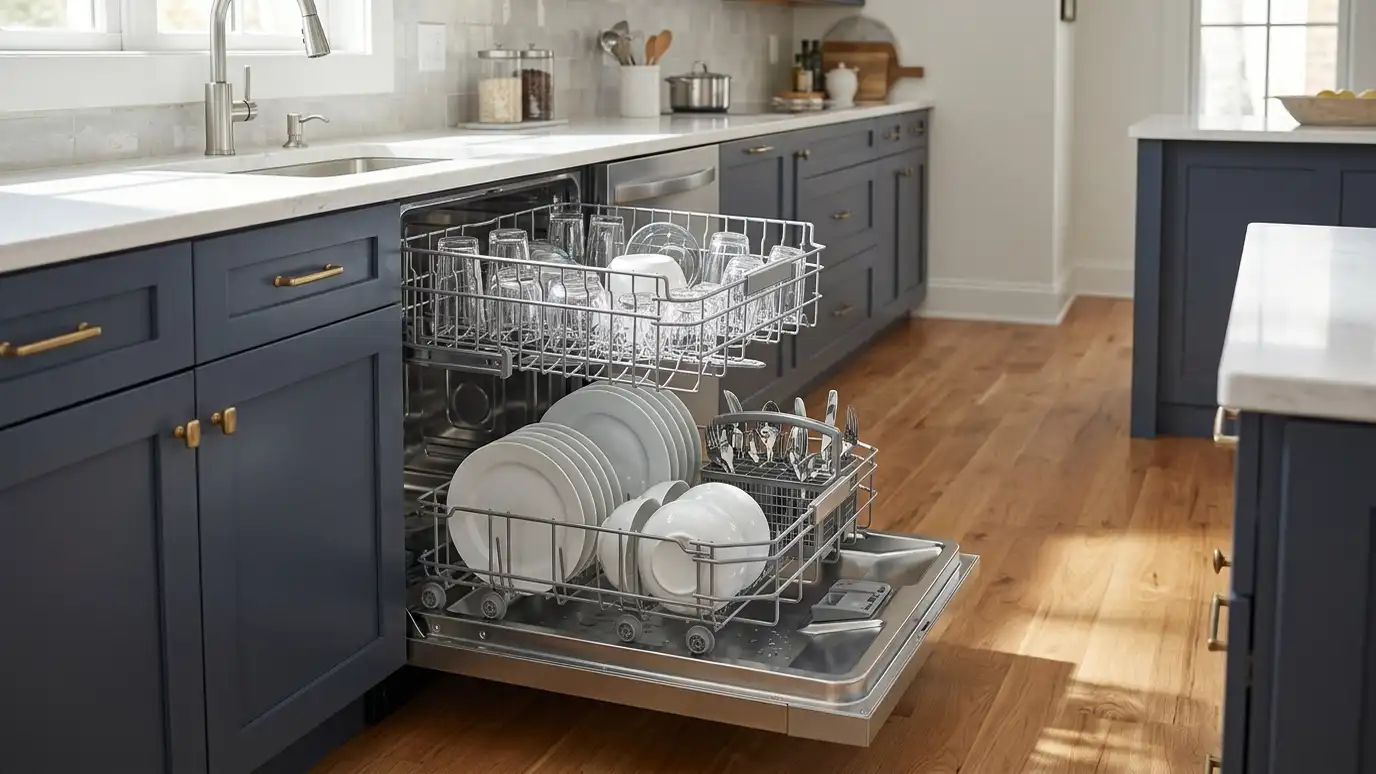
Load so water can reach everything and do not block the spray arms. Check that the arms spin freely and that their holes are clear. Clean the filter and run hot water at the sink before starting.
Use fresh detergent in the right amount and a rinse aid.
If dishes are still dirty, the pump or the water supply may be weak.
Load with the dirtiest surfaces facing the spray arms, keep tall items from blocking the arms and avoid nesting spoons. Good loading often solves what looks like a machine problem.
Standing water
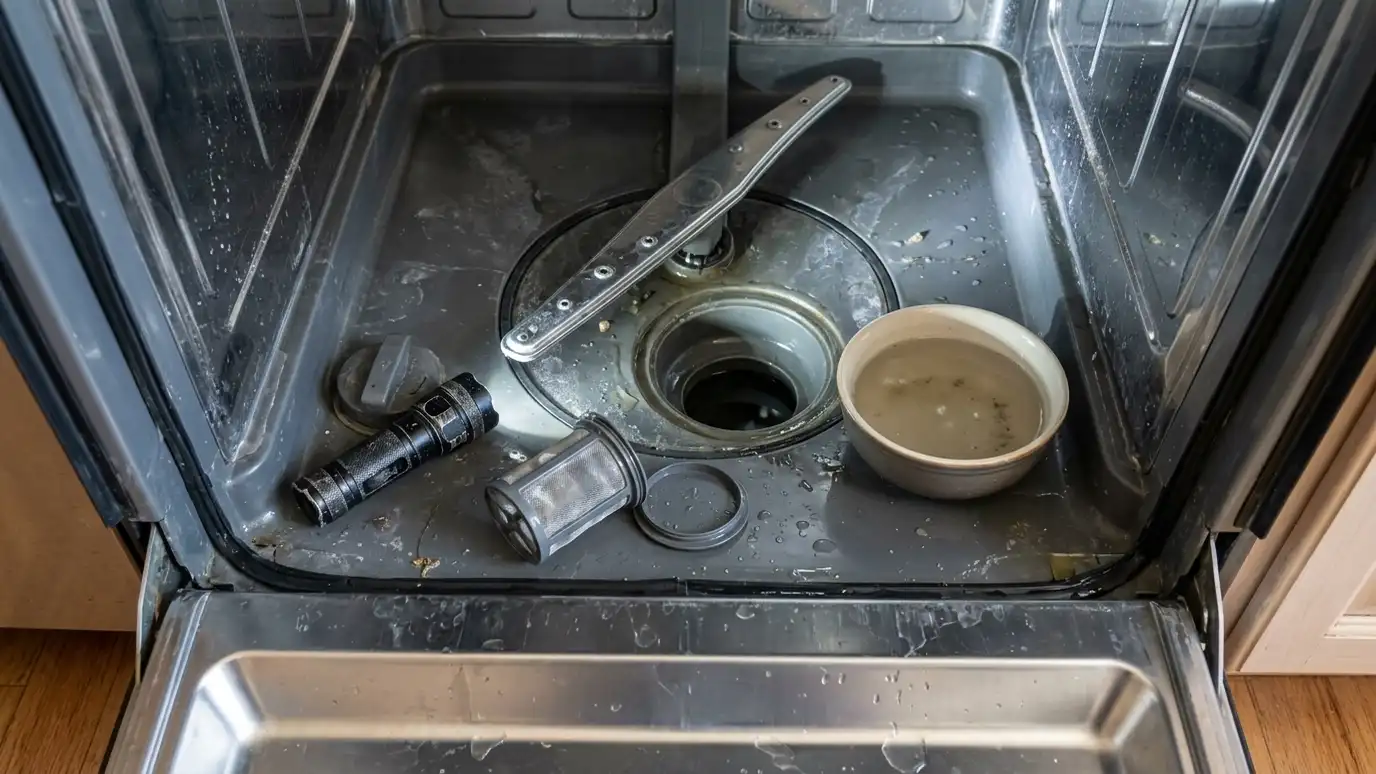
Clean the filter and the sump first, then check the drain hose for kinks and a clogged garbage disposal. A new disposal may have an uncut knockout plug.
A failed drain pump is the next suspect.
Use gloves, because the water is dirty.
If the machine drains into a disposal, run the disposal first and clear it, because a full disposal can send dirty water back into the tub.
Cloudy glasses and film
Hard water leaves a mineral film. Use rinse aid, a dishwasher cleaner or a cup of white vinegar in a cleaning cycle, and avoid overdosing detergent.
If glasses are etched, the damage is permanent.
Softer water settings on the machine help where available.
A cup of white vinegar on the top rack or a commercial cleaner in an empty hot cycle helps with scale. Avoid mixing cleaners, and check your manual for what it allows.
Not drying
A failed heating element, an empty rinse aid reservoir or a vent problem leave dishes wet. Heated dry on and rinse aid on help.
Plastics dry slowly because they hold less heat.
Open the door after the cycle ends to let steam escape.
Rinse aid does real work in drying and in preventing spots. Check the reservoir monthly, and if you have very hard water, a few extra seconds at the sink before starting also helps.
Odors
Food in the filter and the drain causes smells. Clean the filter monthly, wipe the door seal and run a cleaning cycle.
Rinse large food pieces rather than scraping to a spotless plate.
A persistent smell may mean a drain problem.
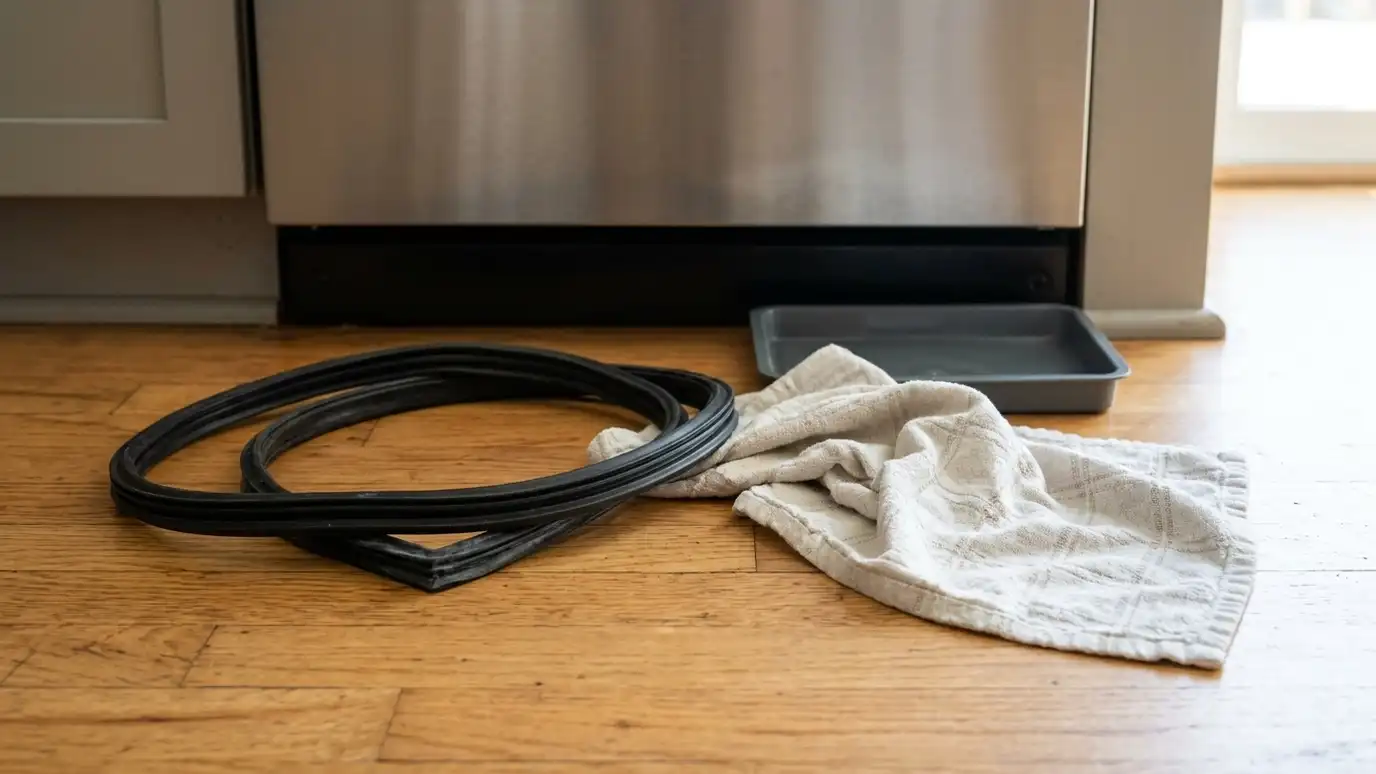
Wipe the door seal, the tub edge and the inside of the door. Residue there causes odors and can create poor seals.
Leaks
Check the door gasket, the door latch and the front edge. A leak from underneath can mean a hose, a pump seal or the inlet valve. Stop using the dishwasher and call.
Close the supply valve under the sink to stop the water.
Dry the floor and the cabinet base.
Look under the sink at the supply line and drain hose now and then. A small drip in the cabinet is far easier to deal with than a soft floor.
Care tips
Run the sink hot before starting, keep the filter clean, use rinse aid, avoid pre-rinsing everything and run a monthly cleaner.
Check the high loop on the drain hose.
Level the machine and check the racks for rust and wear.
If your dishwasher is more than ten years old, keep an eye on the rack coating and the tub for rust. Those are signs that parts are wearing and a repair-or-replace conversation may be near.
Keep the filter and spray arms clean, use rinse aid and the right detergent amount and stop using a leaking machine right away.